In the world of professional design, your logo is your brand’s “handshake.” It is often the very first thing a potential customer sees, and it has less than three seconds to tell them who you are, what you do, and whether they should trust you.
At J.Kol Designs, we believe that a great logo isn’t just about looking “cool”—it’s about strategic alignment. When we create a brand identity, we look at the psychology of your target audience to choose a style that speaks their language.
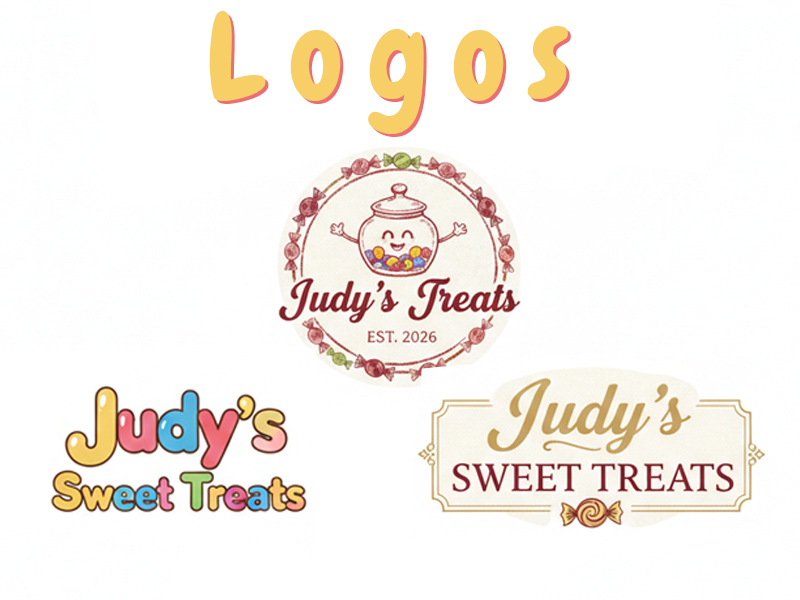
Using a local candy company concept, “Judy’s Sweet Treats,” let’s look at a few of the logo styles currently defining the design world and why one might be better for your business than the others.
Neo-Minimalism
This style is all about “Less, but better.” It uses clean lines, plenty of white space, and warm, inviting color palettes.
Best For: Professional services or high-end retail brands that want to look established, premium, and trustworthy.
Hyper-Expressive Typography
In this style, the letters are the art. By using custom “bubble” or “liquid” fonts, the brand name itself becomes the icon.
Best For: Creative brands, food and beverage companies, or any business that wants to feel bold, energetic, and one-of-a-kind.
Narrative Pop (Hand-Drawn)
Narrative Pop uses “imperfect” illustrations and sketchy, hand-drawn characters. This style is incredibly popular right now because it feels human and authentic.
Best For: Family-owned businesses, kids’ brands, and artisanal shops that want to feel friendly and approachable.
Note: Some brands even experiment with Adaptive Glass (3D textures) or high-contrast gradients to add depth for digital-first platforms.
Why the “Perfect Fit” Matters
If you choose a logo style that doesn’t match your audience, you create a “brand disconnect.” For example, if a kids’ candy shop uses a stiff, corporate minimalist logo, it might feel too cold. Conversely, a high-end law firm wouldn’t want a “bubbly” expressive font.
The goal is to find the intersection where your personal taste meets your customer’s expectations.
To explore more about how visual identity has evolved over the centuries, check out this fascinating look at the history of logo design.